Born in Piraeus on 4 July 1922, he showed an early gift for drawing and painting, and finished his studies at the School of Fine Arts in Athens with a first prize.
He settled in Spain in 1953 on a scholarship to San Fernando in Madrid. There he developed the core of his career and came to be regarded as a Spanish artist, receiving the Critics’ Prize of the Ateneo de Madrid in 1961.
Artistic evolution
Dimitri Perdikidis was born in Piraeus, Greece, in 1922.
He spent his childhood and youth in Greece, painting from a very early age. He studied at the School of Fine Arts of Athens (1950–53), where he received an academic education, and obtained a Spanish Government scholarship to study at the School of Fine Arts of San Fernando in Madrid. Attracted by the strength and mastery of painters such as Goya, Velázquez, and Solana, he went to Spain in 1953, leaving behind a Greece devastated by the German occupation and the subsequent civil war — experiences that marked him throughout his life.
At San Fernando he met many of the Spanish painters who would participate intensely in the aesthetic renewal of the following decades in Spain: informalism in Madrid (Saura, Millares, and the El Paso group) and the sensibility flowing from Barcelona through the artistic group Dau al Set (Tàpies, Cuixart, and others).
He lived for a time in Cuenca, a city to which he remained linked both emotionally and artistically, and held his first exhibition there in 1954.
After a relatively short naturalistic phase with magical, surrealist, and expressionist infiltrations, he cultivated a fluctuating neo-figuration in which vigorous, idealized human figures emerged in large strokes over moving masses of paint. From his first exhibitions he received warm support from the Spanish critics most attentive to artistic transformation.
His first solo exhibitions were held in Madrid — General Directorate of Fine Arts (1957), Bucholz Gallery (1958), Sala Neblí (1960) — and in London at the Woodstock Gallery (1960). He won the National Engraving Award in 1958.
From 1960 he renounced objective pretexts and turned intensely to passionate abstraction, working with growing mastery rich in poetic suggestion and archaic evocations, as if arising from a Greek collective unconscious. He created works of great beauty integrating signs of classical Greece. He participated in the Spanish Pavilion of the VI São Paulo Biennial (1960), received the critics’ prize at the Ateneo de Madrid in 1961 alongside Barjola, and won the international abstract painting prize (silver medal) in Lausanne. He showed his work in Berlin, London, and at the International Art Fair in New York in 1962 (Spanish Pavilion). Much of his work from this period entered collections and museums in the United States. He maintained links with Greece, exhibiting at the Athens Hilton in 1963. In 1964 he participated in the Spanish Pavilion of the XXXII Venice Biennale, and showed at the Juana Mordó Gallery in 1965.
A restless, unsatisfied explorer, he began a transition from abstraction that culminated in his 1966 exhibition at the General Directorate of Fine Arts in Madrid, where he combined his earlier work with matter and introduced hinted figures charged with mythical connotations (Torso, Centaur, Paris and Helen). Here he explored pathos, a tragic sense of existence, and violence held in subtle harmony — producing an intense shock in the viewer.
In 1966 he also participated in the Spanish Pavilion of the XXXIII Venice Biennale.
An apparently instinctive yet refined painter, he began to introduce collage, figures, and human faces, integrating them with surprising mastery: cool paintings full of passion, where mythical evocation and existential reflection with expressionist tones remained. He presented this work at the Ateneo de Madrid (1967), the Rath Museum in Geneva (1967), Brussels (1968) — with works in the Museum of Fine Arts and in Ixelles — and in Los Angeles, California (1969).
From 1970 his painting cooled, linked to the social and political reality of the moment. He worked with airbrush and photographic reproduction, combining constructivist grounds with narrative figuration, using photography and the ubiquitous images of the media to convey human suffering, pain, and anguish. His painting acquired an increasingly intense social content marked by contained anger. He showed his work in Cyprus (1970), at the Seiquer Gallery, Madrid (1971 and 1973), the Nova Gallery, Barcelona (1973), the Technos Gallery, Athens (1974), and the Desmos Gallery, Athens (1975 and 1977). In 1978 he took part in the group exhibition Panorama 78 at the Museum of Contemporary Art in Madrid.
During this period, his deep friendship with the poet Yannis Ritsos led to a series of ten prints illustrating the book of poetry Romiosini (Grecidad). The text was translated into Spanish by his wife Elena Perdikidis and published with the prints by Visor, Madrid.
After the experience of critical realism was exhausted, coinciding with the Spanish transition and its social transformations, his 1980 exhibition at the Ynguanzo Gallery in Madrid marked a return to abstraction rich in suggestion — a fusion of structural and formal elements from his earlier periods, influenced by constructivism and incorporating mature elements from his previous abstract work. During the 1980s he explored the multidimensional possibilities of painting on wood, leaving many works unfinished at his sudden death. Though deeply attached to Spain, he spent his last years in Greece after his wife’s death, returning to the land of his birth. His final exhibitions were held in various Athens galleries (1985–1989). He died in Athens in December 1989, always mindful of his Spanish journey. One of his works was included in the exhibition Madrid and the 60s at the Comunidad de Madrid exhibition hall.
Photos
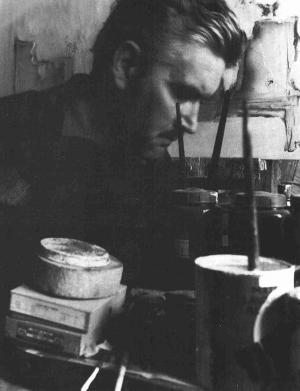
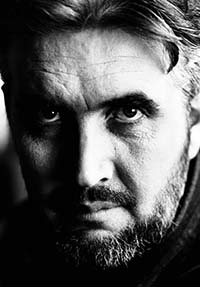
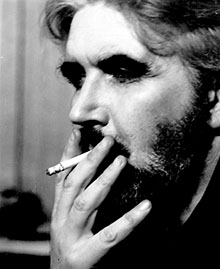
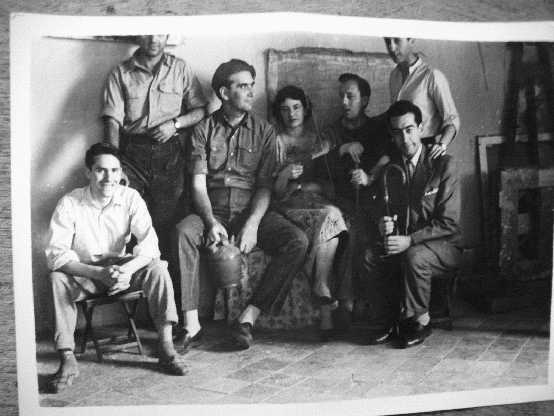
Photographs of the painter, his family, and friends.
Awards
1958 1st National Award from the School of Graphic Arts in Madrid.
1961 1st Prize of Painting from the Spanish Art Critics Association.
1961 Silver Medal of Painting, International Prize of Abstract Art, Kasper Gallery, Lausanne.